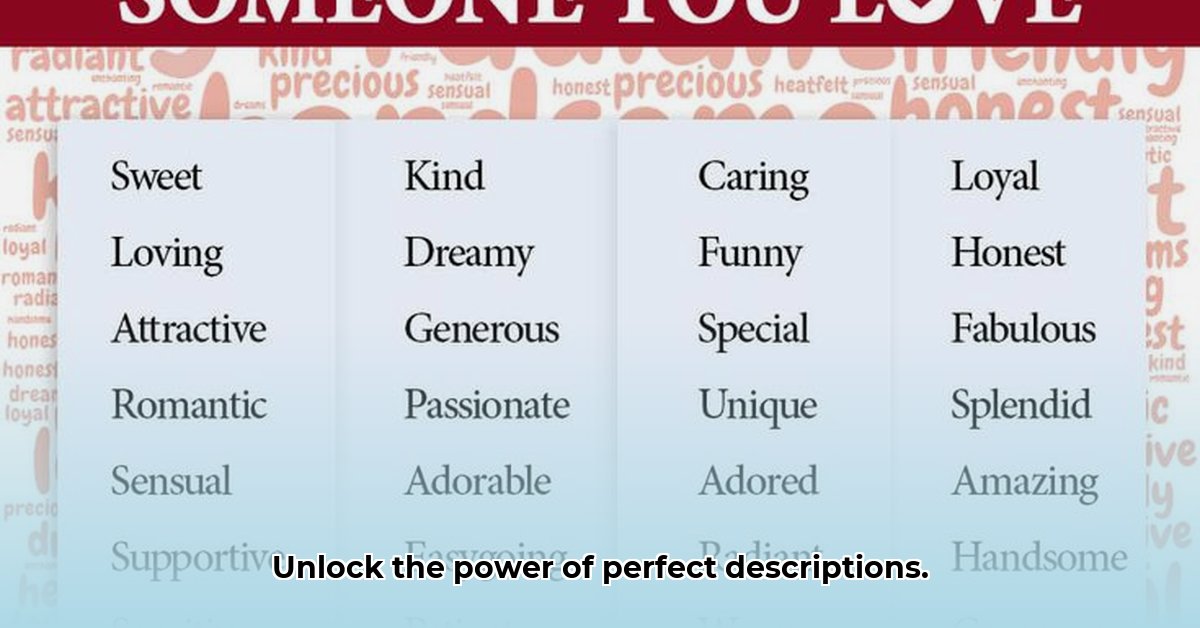
Choosing the Right Words: A Guide to Precise and Respectful Descriptions
Picking the perfect words to describe someone is a nuanced art. It's not merely about finding synonyms; it's about crafting a fair, accurate, and impactful portrayal that avoids bias and misinterpretation. This guide equips you with the tools and techniques to master this essential skill. For more word ideas, check out this helpful resource on words starting with "O": Words Starting with O.
Categorizing Descriptors: Building Your Descriptive Palette
Think of describing someone as painting a portrait. You need a range of colors to capture the full picture accurately. Similarly, effective descriptions utilize diverse adjectives, carefully chosen to reflect the subject’s unique characteristics.
Positive Descriptors: Highlighting Strengths
These showcase admirable qualities. Examples include: kind, intelligent, creative, determined, helpful, generous, resilient, and funny. However, even positive words require context. "Brilliant" needs elaboration. Is their brilliance evident in their scientific breakthroughs, artistic talent, or quick wit?
Negative Descriptors: Addressing Flaws with Caution
We all have shortcomings. Words like selfish, lazy, rude, and inconsiderate describe undesirable traits. Use these sparingly and only when you have strong evidence. Focus on specific behaviors rather than labeling. For example, instead of "He's lazy," describe how "He consistently missed deadlines and failed to complete assigned tasks."
Neutral Descriptors: Establishing a Foundation
These words objectively describe without judgment. Examples include: quiet, reserved, organized, outgoing, practical, analytical. They form the foundation of a balanced description, providing a neutral backdrop for more nuanced details.
Nuanced Descriptors: Exploring Complexity
These words carry both positive and negative connotations depending on context. Examples include: ambitious, opinionated, independent, passionate. "Ambitious" might signify drive and success or ruthlessness and cutthroat behavior. Context is paramount.
| Category | Example Words | Nuances |
|---|---|---|
| Positive | Kind, Intelligent, Creative, Determined | Shows admiration; requires specific supporting examples. |
| Negative | Selfish, Lazy, Rude, Inconsiderate | Employ cautiously; strong evidence and precise wording are crucial. |
| Neutral | Quiet, Organized, Outgoing, Practical | Provides an objective base; avoids value judgments. |
| Nuanced | Ambitious, Opinionated, Independent, Passionate | Context-dependent; interpretation varies significantly based on the situation. |
Understanding Context and Nuance: Perception is Key
The interpretation of a word depends heavily on context, cultural background, and the relationship between the observer and the observed. "Stubborn" might mean "determined" to one person and "uncooperative" to another. Cultural differences further complicate matters, making universal interpretations elusive. This inherent subjectivity underscores the importance of careful word selection.
Avoiding Bias and Misinterpretation: The Power of Responsible Language
Mindful word choice is vital to avoid perpetuating harmful stereotypes. Strive for accuracy and fairness. Support your descriptions with specific examples and anecdotes, avoiding broad generalizations and labels. For instance, instead of labeling someone as "aggressive," describe specific instances of their behavior: "During the debate, he frequently interrupted his opponents, raising his voice."
Advanced Techniques: Enhancing Descriptive Power
Mastering description goes beyond simple adjectives. Employ strong verbs and vivid imagery to paint a compelling picture. Instead of "She's kind," write about her volunteering at an animal shelter and cuddling anxious kittens. Show, don't tell. Use specific actions and behaviors to substantiate your claims. Figurative language, such as metaphors and similes, can add depth and impact ("His laughter was like warm sunshine").
A Step-by-Step Guide to Effective Description
- Define your objective: What impression do you wish to create?
- Consider your audience: How well do they know the individual? What's their relationship?
- Choose words precisely: Avoid vague language; favor precision and accuracy.
- Illustrate with examples: Use specific anecdotes to support your assertions.
- Refine and revise: Ensure clarity, fairness, and freedom from bias.
Mastering the art of description requires practice and mindful attention to detail. By consistently applying these principles, you'll enhance your ability to communicate effectively and create lasting impressions through precise and sensitive language.